Saturday morning at the ramp, someone is on their fourth attempt to back a trailer while six trucks wait behind them. The boat on that trailer is 26 feet. It is a nice boat. It is also the reason this is taking fifteen minutes instead of two.
That scene plays out at every ramp on the Chesapeake every spring, and it is almost always the same mistake. The best boat for beginners is usually two or three feet shorter than the one that looked right in the brochure. But size is only part of the equation. The best boats for beginners are also easy to handle, practical to maintain, and suited to the waters where you will actually use them. This list is ordered by how many first-time buyers each type genuinely suits, starting with the one most people should be looking at and ending with the ones that fit a narrow buyer well and everybody else badly.
1. Small Center Consoles for Fishing and Family Use
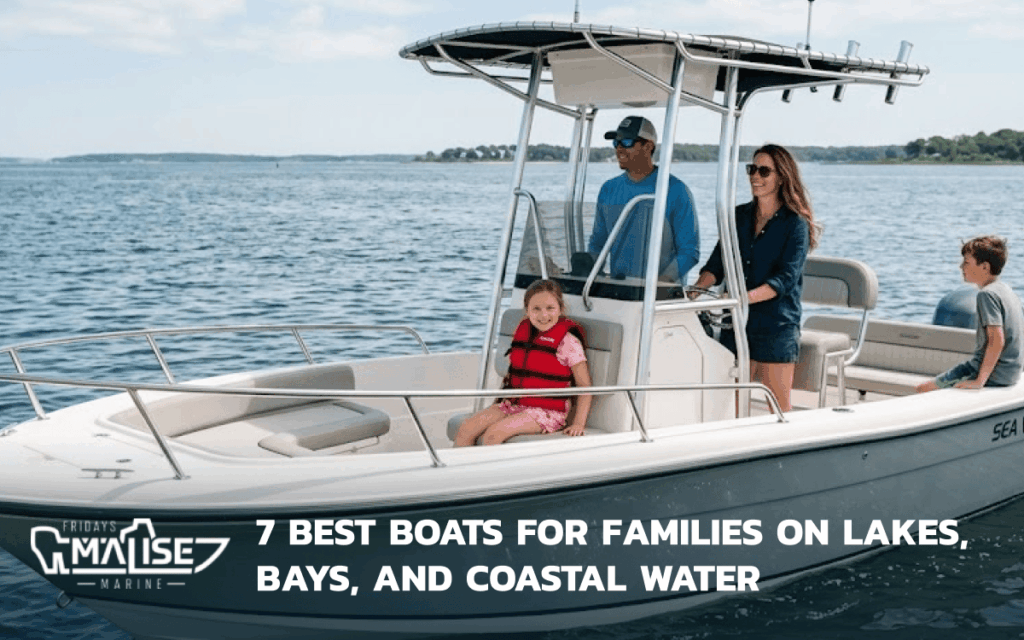
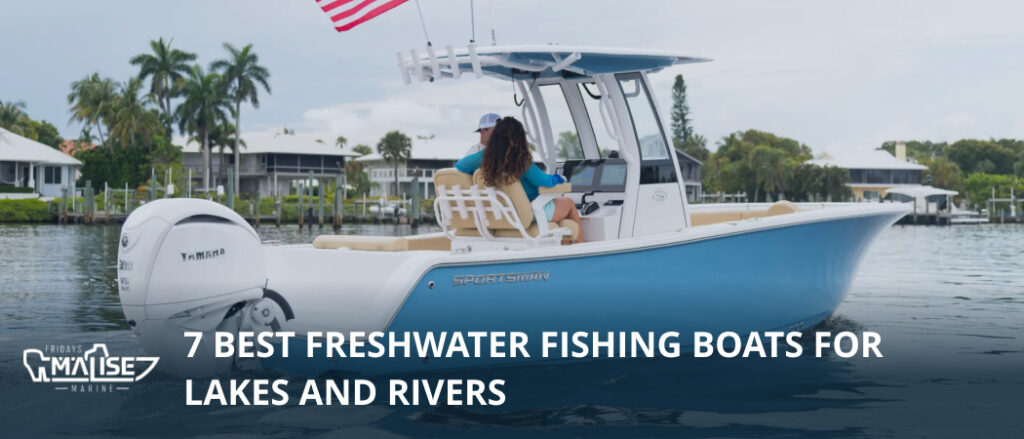
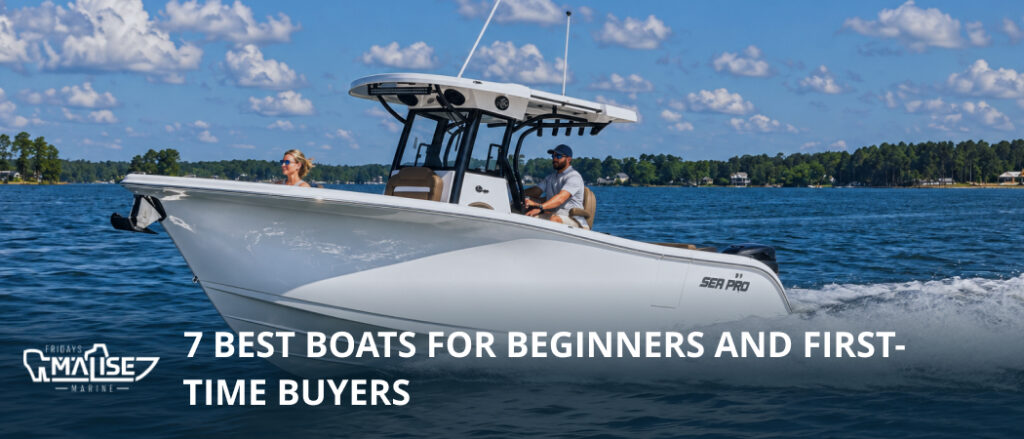
This is the answer for more first-time buyers than any other type, and the reason is layout rather than anything exotic. The helm sits in the middle, the deck is open on all four sides, and you can see every corner of the boat from where you stand. That last part is what makes docking manageable in month one instead of month six.
It also fishes, carries a family, handles a swim stop, and tows behind a half-ton truck without drama. Nothing else on this list covers that many jobs at once.
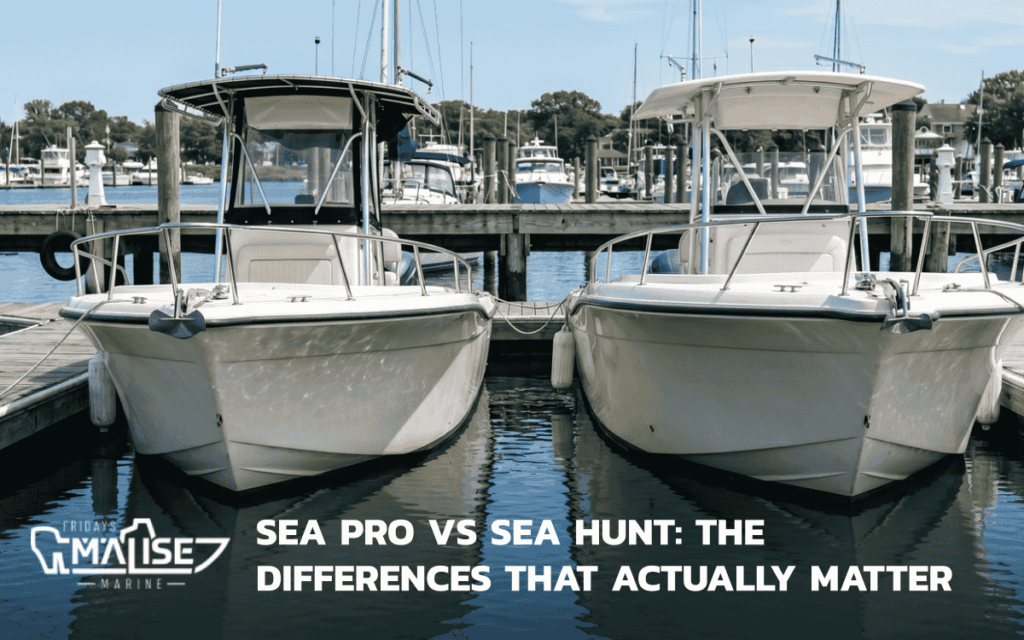
Entry pricing runs roughly $90,000 to $110,000 new for a well-equipped 21-footer. The Sea Pro 240 DLX sits at $92,033 fully rigged, which is about as much boat as you can buy at that price. A Sportsman Open 212 runs higher and brings a 10-year structural hull warranty, which matters more if you are keeping it a decade than if you are trading in three years.
Where it falls short
- No weather protection at the helm. On a cold April morning, you feel every bit of the wind.
- Less lounge seating than a bowrider at the same length, so pure cruisers sometimes wish they had gone the other way.
2. Bowriders for Cruising and Watersports
The most-sold first powerboat in America, and that is not an accident. Forward seating in the bow, a windshield, and an outboard or sterndrive in the stern. Anyone who has been on any boat understands a bowrider in about ninety seconds.
Buy this one if your weekends are cruising, swimming, tubing, and the occasional afternoon of fishing rather than the reverse. The windshield earns its keep every time the temperature drops or the spray picks up.
The catch shows up when you actually fish. Getting from bow to stern means stepping around the windshield structure instead of walking an open deck, and with four people aboard and rods out, that gets old. Buyers who fish more than they expected tend to move to a center console on boat number two.
3. Aluminum Fishing Boats for New Owners
The cheapest honest way into boat ownership. A Tracker Bass Tracker Classic XL runs around $14,000 with motor and trailer. Nothing else gets you on the water for that, and aluminum shrugs off dock rash and the occasional stump in a way fiberglass does not.
It tows behind almost anything, launches solo, and the maintenance is simple enough that you can handle most of it yourself. For a buyer who fishes calm rivers and protected creeks and wants to find out whether boating actually sticks before spending six figures, this is the smart first move.
What it will not do is handle open water. Flat and shallow-V aluminum hulls slap hard in chop, and the ride turns unpleasant well before a deeper hull would notice anything. Know where you will actually be running.
4. Pontoons for Relaxed Family Boating
Easiest boat on this list to operate. The flat deck gives you a clear sightline to all four corners, passengers moving around do not rock it, and docking forgives a lot of early mistakes. On a protected lake or a calm creek, it is genuinely hard to beat for a group.
The limitation is not subtle. A pontoon floats on top of waves rather than cutting through them, so the first time you get caught in real Bay chop, the ride goes from pleasant to unsettling fast. Most experienced pontoon owners treat it as a calm-water boat and own something else for the rest.
Why Trailering Matters More Than You Think
Everybody researches hulls. Almost nobody researches the trailer, and the trailer is where the first season actually gets decided.
A loaded trailer weighs more than the boat’s dry weight by a wide margin once you add fuel, batteries, gear and the trailer itself. A 21-foot center console that lists at 3,200 pounds dry is closer to 5,000 pounds going down the road. Check your tow vehicle’s rating against that number, not the brochure number.
And back the empty trailer into a parking space a few times before you ever do it at a ramp with an audience. Hand at the bottom of the wheel, move it the direction you want the trailer to go, small corrections. Twenty minutes in an empty lot on a Tuesday saves you that Saturday morning scene at the top of this article.
5. Deck Boats for Family Outings
Wider than a bowrider at the same length, which buys you more usable deck and a steadier platform at rest. For a family that wants room for everyone without stepping up to a bigger boat and a higher price, it hits a reasonable middle.
The extra beam costs you some handling precision in tight spaces. Not difficult, but a first-time driver notices it when threading a marina. Against a pontoon, it rides better in chop. Against a center console, it gives up fishing practicality.
6. Dual Consoles for Families Who Fish
A walk-through windshield connects the bow seating to the cockpit, which splits the difference between a bowrider and a center console. You get spray and wind protection at the helm without giving up a usable fishing cockpit. For a family where one person fishes seriously and the rest would rather sit out of the wind, this is often the honest answer.
It is also a compromise in the literal sense. Less open deck than a center console, less lounge comfort than a bowrider. If you lean clearly one direction, buy that boat instead.
7. Shallow-Draft Skiffs for Quiet Creeks
Last on this list because it fits the fewest beginners, not because it is a lesser boat. At five to six inches of draft, a skiff like the Xplor Delta 18 reaches creek systems, grass flats and marsh edges that every other boat here rules out. If that is the fishing you want to do, nothing else substitutes.
It is not a family day boat, it does not carry a group, and it does not belong in open water. Buy it as a first boat only if backwater fishing is the actual reason you are buying a boat at all.
How the Seven Options Compare
Before the more specialized options, here is the whole list side by side. The ones further down are not worse boats, they just fit fewer people.
| TYPE | TYPICAL NEW PRICE | BEST FOR | MAIN LIMITATION |
| Small Center Console | $90K-$110K | Mixed fishing and family use | No helm weather protection |
| Bowrider | $40K-$80K | Cruising, watersports, swimming | Awkward to fish from |
| Aluminum Fishing Boat | $14K-$35K | Budget entry, calm water fishing | Rough ride once chop builds |
| Pontoon | $25K-$60K | Groups, lounging, protected water | Struggles badly in real chop |
| Deck Boat | $45K-$85K | Big groups, day trips | Wider beam, less precise handling |
| Dual Console | $70K-$120K | Splitting fishing and family evenly | Less open deck than a center console |
| Shallow Draft Skiff | $55K-$80K | Backwater and flats fishing only | Not a family or rough water boat |
Should Your First Boat Be New or Used?
The standard advice is to buy used for a first boat. Let somebody else eat the depreciation, learn on something you will not cry over when you scuff it, trade up once you know what you want. That argument is sound, and I have watched it work well.
I have also watched it go the other way. A used boat with no service history turns into a $4,000 lower unit in month four, and the buyer who was trying to spend less ends up spending more and losing most of a season to a repair shop. A new boat under warranty removes that variable entirely, which is worth real money to someone who does not yet know how to spot a tired motor.
Where it lands depends on whether you can get a proper pre-purchase inspection and whether you can read the service records once you have them. If you can, used usually wins. If you cannot, the warranty is buying you something real. I have stopped trying to give one answer to this.
Questions First-Time Boat Buyers Ask
How big should my first boat be?
Sixteen to twenty-two feet covers almost everybody. Under sixteen limits where you can go safely, over twenty-four makes docking and trailering harder than it needs to be while you are still learning.
Is a center console hard to drive?
It is the easiest of the fiberglass options, mostly because you can see all four corners from the helm. Pontoons are easier still, but they trade that for rough water performance.
What does a boat actually cost per year?
Roughly ten to fifteen percent of the purchase price once you add insurance, storage, fuel, annual service and registration. A $50,000 boat runs $5,000 to $7,500 a year to own properly. Budget for that before you buy, not after.
Can I learn on the Chesapeake or should I start somewhere calmer?
Start in the tidal rivers. The Rappahannock and Piankatank give you protected water with enough variety to learn on, and you can work up to the open Bay once docking and reading conditions feel automatic.
Find Your First Boat at Malise Marine
We have sold first boats on the Middle Peninsula and Northern Neck since 1982, which means we have also watched a lot of people buy the wrong one and come back two seasons later. Our boats for sale cover the range above, from the Xplor skiffs through family-friendly center consoles. If you are deciding between two sizes, come stand on both at Saluda or Deltaville before you commit. It settles the question faster than any spec sheet.