Sea Pro vs Sea Hunt: The Differences That Actually Matter
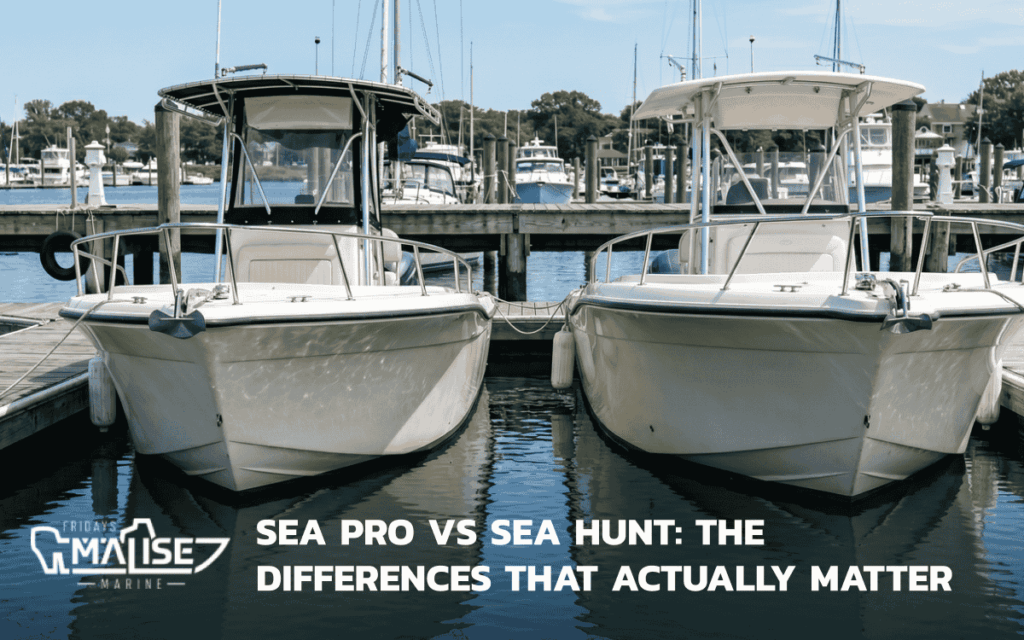
Sea Pro vs Sea Hunt comes up constantly in boat-buying forums, and most of the answers people get back amount to a shrug followed by a personal opinion with no real explanation behind it. Both brands build out of South Carolina, both have a loyal following, and both show up on the same shortlist for buyers cross-shopping a center console or bay boat in the same general price range. That overlap is exactly why the comparison gets confusing rather than easy, since on paper, the two brands look like they are answering the same question.
They are not, once you look past the surface. The hull geometry is genuinely different, the engine options are structured differently, and the fishability tradeoffs point toward different kinds of trips. This breaks down what actually separates Sea Pro and Sea Hunt across the categories that matter most, using verifiable specs and real owner feedback rather than vague brand impressions.
Why Sea Pro and Sea Hunt Ride Differently
Hull geometry is the single biggest factual difference between these two brands, and it shows up in how each boat actually rides rather than in anything visible at a boat show. Sea Hunt builds around a deeper V shape, with transom deadrise commonly falling in the 20 to 24 degree range, depending on the model. That steeper angle is what lets a hull slice through waves instead of pounding across them, and it is the main reason Sea Hunt has built a reputation for a soft landing in messy offshore chop. Bow flare adds to that picture, helping keep spray off the deck and passengers dry even when conditions get rougher than ideal.
Sea Pro takes a different approach with a flatter deadrise, typically in the 18 to 21 degree range, paired with a wider beam and more aggressive chines along the hull sides. The result is a boat that feels stable and efficient in light to moderate chop, particularly inshore and nearshore, without the steeper roll-to-roll motion some flatter hulls produce at rest. Recent Sea Pro models add active trim systems like Seakeeper Ride, which adjust continuously to reduce pitch and improve ride comfort at speed, narrowing some of the comfort gap that hull angle alone would otherwise create.
The Engine Difference Buyers Should Not Ignore
This is the comparison most buyers skip past too quickly, and it has real long-term consequences. Sea Hunt rigs exclusively with Yamaha outboards, full stop, with no other brand offered on any model. Sea Pro takes the opposite approach and offers a genuine choice of Suzuki, Yamaha, or Mercury, depending on the model and dealer, which means a Sea Pro buyer is not locked into a single manufacturer’s service network the way a Sea Hunt buyer is.
That distinction matters most after the sale rather than at the moment of purchase. If you already have a relationship with a specific outboard brand, or a dealer near you who services one brand particularly well, Sea Pro lets you match the boat to that relationship instead of the other way around. Several Sea Pro center consoles run Suzuki power specifically because of the service and parts support behind that motor, and that kind of alignment between hull and engine brand is something Sea Hunt’s single-manufacturer approach does not allow.
Tournament Focus Versus Everyday Flexibility
Fishing capability is not a single feature, but rather a combination of livewells, deck space, rod storage, and how the entire layout works together once a rod is actually bent. Sea Hunt’s Gamefish and Ultra series lean hard into serious angling, with layouts built around tournament-style features and a reputation for prioritizing hardcore fishability over creature comforts. That focus is evident in the deck layout and rigging options, which appear to have been designed by people who fish far more than they cruise.
Sea Pro takes a more balanced approach. The fishing features are genuinely there, multiple livewells, fish boxes, and integrated rod holders show up across the lineup, but the standard configuration tends to be a little more simplified than Sea Hunt’s most fishing-focused models. What Sea Pro offers in exchange is flexibility, since optional packages let a buyer tailor the boat toward serious fishing or toward family use without paying for tournament-grade features they may never use.
Compare the Model, Not Just the Brand
Forum consensus across multiple boating communities lines up consistently on this point. In an apples-to-apples comparison with similar length, similar power, and similar equipment, Sea Pro tends to come in at a lower price point than a comparably equipped Sea Hunt. That gap is not enormous, but it is consistent enough that buyers comparing two specific models side by side regularly note it.
A 2025 boat test from Boating Mag put real numbers behind this for one specific comparison, pricing a well-equipped Sea Pro 225 FLX Sandbar Boat with a 200-horsepower Suzuki at roughly 82,000 dollars, while noting a comparably sized 2025 Sportsman Open 212 with a 200-horsepower Yamaha listed close to 89,500 dollars. That single data point will not settle every comparison across every model, but it confirms the general pattern buyers report, where a Sea Pro at a given size and power level often costs somewhat less than equivalent boats from other established brands in the same category.
Sea Pro vs Sea Hunt at a Glance
Reading through each category in detail is useful once, but a side-by-side summary makes the tradeoffs easier to weigh against your own priorities. Here is how the two brands stack up across the factors that matter most.
| CATEGORY | SEA HUNT | SEA PRO |
| Hull Dead Rise | Steeper, roughly 20 to 24 degrees | Flatter, roughly 18 to 21 degrees |
| Best Water Type | Offshore and rougher open water | Inshore and nearshore, moderate chop |
| Engine Brands Offer | Yamaha Only | Suzuki, Yamaha, or Mercury |
| Fishing Focus | Tournament-oriented standard layouts | Balanced, flexible with optional packages |
| Typical Price Position | Comparable or slightly higher | Often somewhat lower for similar specs |
What to Check Before Choosing Either Brand
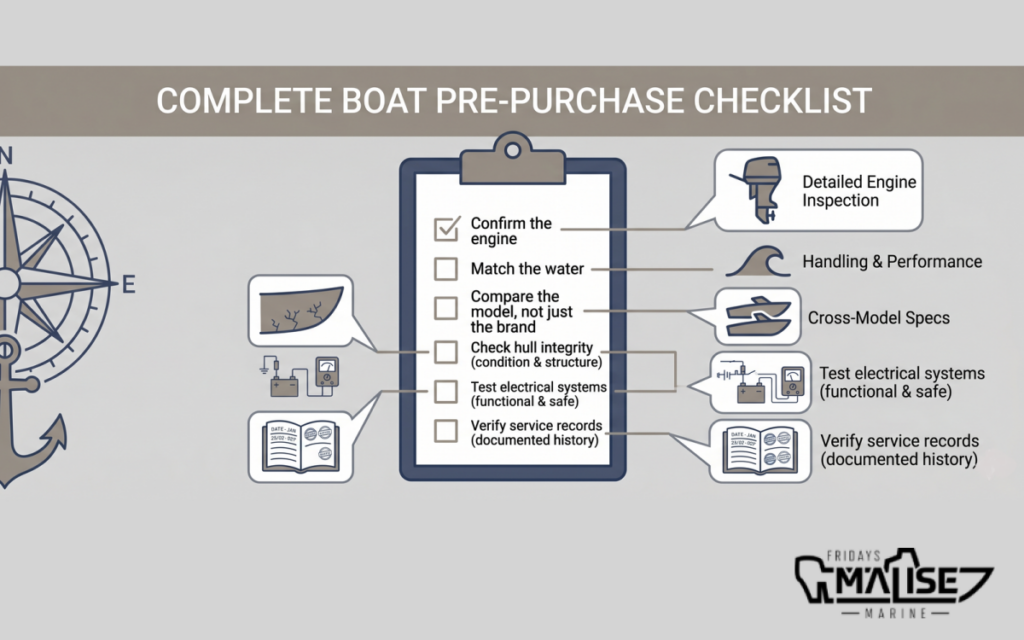
The category-by-category comparison above covers the brand-level differences, but a handful of practical details matter just as much when looking at an actual boat rather than a spec sheet.
1. Check the Engine and Local Service Support
Since Sea Pro offers a genuine engine choice, two boats with the same model name can be rigged completely differently depending on what the original buyer or dealer selected. Always confirm the specific engine brand and horsepower on the boat in front of you rather than assuming based on the model name alone, since that detail affects everything from parts availability to who can service it down the road.
- 1. Ask for the engine brand, model, and horsepower in writing, not just the listed total horsepower
- 2. Check whether the selling dealer is certified to service that specific engine brand, not just the boat brand
- 3. Confirm parts availability locally before assuming a quick repair is realistic if something goes wrong
2. Let Your Local Water Guide the Choice
- 1. Be honest about how far offshore you realistically run on a typical outing, not on the one ambitious trip you might take once a year
- 2. Consider how often you fish in genuinely rough conditions versus how often you are inshore or at anchor
- 3. Remember that a drier ride offshore on a deep V hull trades off against slightly less stability at rest compared to a flatter hull.
3. Compare Models Rather Than Brand Names
Both brands build multiple series with meaningfully different priorities, so a blanket opinion about Sea Pro or Sea Hunt as a whole tells you less than comparing the two specific models you are actually considering. A Sea Hunt Escape series and a Sea Hunt Gamefish series are not built around the same priorities, and the same is true comparing a Sea Pro bay boat to a Sea Pro offshore center console.
- 1. Compare the two exact models side by side, not the two brands, as a general impression
- 2. Ask what series within each brand the boat in front of you actually belongs to, since that tells you more than the brand name alone
- 3. Treat a single owner’s strong opinion as one data point, not as proof either brand is universally better
Choosing Based on How You Actually Boat
Everything above holds up regardless of where you boat, but the right answer for any individual buyer still comes down to matching the boat to real conditions rather than picking a brand based on reputation alone. A buyer running serious offshore trips most weekends has a different right answer than a buyer who fishes inshore creeks and occasionally pushes out to nearshore structure.
We carry Sea Pro specifically because the Suzuki-powered configurations we sell match the kind of inshore and nearshore boating most of our customers actually do, and because being a certified Suzuki service center means we can support that motor for as long as you own the boat. We do not carry Sea Hunt, so this comparison is not meant to push you toward one brand over the other so much as to give you the real differences other guides tend to gloss over. Whichever brand ends up fitting your situation, the questions worth asking are the same, like how rough does your water actually get, how locked in do you want to be to one engine brand, and how much of your time is dedicated to fishing versus general use on the water.
Frequently Asked Questions
Is Sea Pro the same company as Sea Hunt?
No, they are separate manufacturers. Both are based in South Carolina and build similar categories of boats, which is part of why they get compared so often, but they are independently owned brands with different hull designs and different engine partnerships.
Which is better, Sea Pro or Sea Hunt?
Neither is universally better. Sea Hunt’s deeper hull suits offshore and rougher water better, while Sea Pro’s flatter, wider hull suits inshore and nearshore use well and adds the flexibility of choosing your engine brand. The right answer depends on where and how you actually boat.
Does Sea Pro offer Suzuki outboards?
Yes, Sea Pro offers Suzuki, Yamaha, or Mercury, depending on the model and dealer, which is a meaningful difference from Sea Hunt, which rigs exclusively with Yamaha across its entire lineup.
Is Sea Pro a good boat for fishing and family use?
Sea Pro’s standard layouts tend to balance fishing features with family-friendly comfort more than Sea Hunt’s more tournament-focused models, and optional packages allow further customization toward either priority depending on how the boat will actually be used.